Posted

Who is the Creator? The Bible, which is God’s inspired account, tells us that “in the beginning God created the heavens and the earth” (Gen. 1:1).

And, who is this God? The Hebrew word Elohim, which is the plural form of God, is the name used to describe the Creator (cf. Gen. 1:26-27). He is also called by the name Jehovah (some pronounce it Yahweh or Yehuvah), often translated LORD. “This is the history of the heavens and the earth when they were created, in the day that the LORD God made the earth and the heavens” (Gen. 2:4).

The Bible further defines God, when it says: “Yet for us there is one God, the Father, of whom are all things, and we for Him; and one Lord Jesus Christ, through whom are all things, and through whom we live” (1 Cor. 8:6). Thus, we see that all things were created by God the Father through Jesus Christ.

God’s creation account also tells us that, in the beginning when God created the heavens and the earth, “the Spirit of God was hovering over the face of the waters” (Gen. 1:2). And so we see that the Holy Spirit, too, was active in the creation of all things.

The opening verses of John’s Gospel tell us: “In the beginning was the Word, and the Word was with God, and the Word was God. He was in the beginning with God. All things were made through Him, and without Him nothing was made that was made. In Him was life, and the life was the light of men” (John 1:1-4). And so, we learn that the Word, Jesus Christ, identified in verse 14 as God Himself in the flesh and the only-begotten Son of the Father, created all things and is the giver of life, both physical and spiritual.

In St. Paul’s letter to the Colossians, the inspired Scriptures say of Christ Jesus, that “He is the image of the invisible God, the firstborn over all creation. For by Him all things were created that are in heaven and that are on earth, visible and invisible, whether thrones or dominions or principalities or powers. All things were created through Him and for Him. And He is before all things, and in Him all things consist” (Col. 1:15-17).

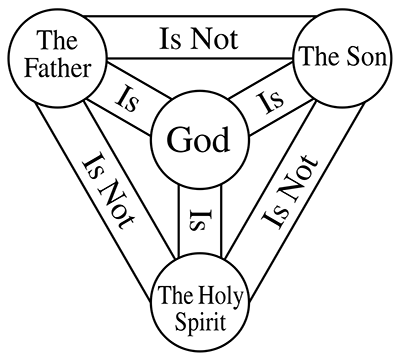
So, who is the Creator? It is God, the God the Scriptures identify for us as God the Father, God the Son and God the Holy Spirit.

Though God is one – “Hear, O Israel: The LORD our God, the LORD is one!” (Deut. 6:4) – God is also three – thus, the command to “Go therefore and make disciples of all the nations, baptizing them in the name of the Father and of the Son and of the Holy Spirit” (Matt. 28:19).

This is why the God of the Bible is often called the Triune (three/one) God, because He is one God and yet three distinct Persons. The Father is God, the Son is God and the Holy Spirit is God. Yet, there are not three Gods, but one God.

The Bible also tells us “there are three that bear witness in heaven: the Father, the Word, and the Holy Spirit; and these three are one” (1 John 5:7).

Though beyond our ability to comprehend, this is how God has revealed Himself to us – it is His account and His word. And it is this God who has created all things and given us life.

[Scripture taken from the New King James Version®. Copyright © 1982 by Thomas Nelson. Used by permission. All rights reserved.]

Author
Categories ,

Posted

“Give us this day our daily bread.” Matthew 6:11

Though the LORD God provides for the needs of both believer and unbeliever, God desires that we look to Him and trust in Him to provide us with food, clothing, and all we need day by day. As the Gospel of Luke says, “Give us day by day our daily bread” (11:3).

God taught His children that very thing when He led them out of Egypt and into the wilderness. When they needed food, He provided them with manna from heaven, sufficient for all to eat. But He also commanded them to gather only enough for each day.

When some disobeyed His commandment and gathered more than needed for a single day, the leftover manna bred worms and stunk on the next morning. On the day preceding the Sabbath, God commanded that they gather enough for two days; and it did not spoil as on other days. Again, when some did not listen and went out on the Sabbath to gather manna, there was none. Cf. Exodus 16.

Thus, God taught His people, who had grumbled and complained because they needed food in the wilderness, to trust Him each day for their daily bread.

Moses told the people: “So He humbled you, allowed you to hunger, and fed you with manna which you did not know nor did your fathers know, that He might make you know that man shall not live by bread alone; but man lives by every word that proceeds from the mouth of the LORD” (Deut. 8:3).

God even let His people suffer hunger that He might teach them to look to Him for their daily bread, and to His Word for their very life!

The Bible teaches us that we should be satisfied if we have the food and clothing needed for each day. Paul wrote to Timothy: “And having food and clothing, with these we shall be content” (1 Tim. 6:8).

Yet we are often fearful if we do not have our needs supplied for months, or even years, in advance. Jesus would have us trust our heavenly Father and look to Him to meet all our needs each and every day of our lives. He would not have us worry about what we will eat, what we will drink, or what we will wear. Rather, He would have us, in faith, turn to Him who knows our every need and so graciously provides (cf. Matt. 6:25-34).

Indeed, He may even let the cupboards be bare and the closets be empty to teach us to trust Him day by day. God would have us cast all our care upon Him, for He cares for us (cf. 1 Pet. 5:7).

And thus, Jesus teaches us to pray: “Give us this day our daily bread.”

Dear Father in heaven, we look to You to provide each day our daily bread. Keep us from worry or complaint and teach us to trust You to care for our every need, day by day. In Jesus’ name, we pray. Amen.

[Scripture taken from the New King James Version®. Copyright © 1982 by Thomas Nelson. Used by permission. All rights reserved.]

Author
Categories ,

Posted

“Your will be done on earth as it is in heaven.” Matthew 6:10b

In heaven, all live in accord with God’s perfect and holy will. The psalmist writes: “Bless the LORD, you His angels, who excel in strength, who do His word, heeding the voice of His word. Bless the LORD, all you His hosts, you ministers of His, who do His pleasure” (Psalm 103:20-21).

On earth, since the fall of mankind into sin which is recorded in Genesis 3, it is not so; but man, as he is by nature, rebels against God’s perfect will and seeks to go his own way. Again, the Bible tells us: “All we like sheep have gone astray; we have turned, every one, to his own way” (Isa. 53:6).

Jesus, in the prayer which He has taught us to pray, directs us to pray that God’s will be done on earth — in our own lives — as it is in heaven! And what is God’s will? We find His perfect will recorded for us in the Holy Scriptures; God would have us faithfully believe and teach God’s Word and live according to it, submitting our will to His perfect will for us.

Jesus, God’s Son, faithfully carried out the will of His Father in heaven, even praying in the Garden of Gethsemane, “Not My will, but Yours, be done” (Luke 22:42), and being “obedient to the point of death, even the death of the cross” (Phil. 2:8). We, on the other hand, so often say with our words and actions, “Not Your will, but mine be done!”

But God the Father laid all our sin and guilt upon His Son, Christ Jesus; and Jesus paid the just penalty for our sins (Isa. 53:6). Jesus died on the cross, making full atonement for our sins and the sins of all, and rose again on the third day (1 Cor. 15:3-4).

God’s will for us is that we repent of our rebellion and sin against Him and trust in Christ’s shed blood for forgiveness and life. And, as a fruit of our faith in Christ, God desires that we conform our lives to that of His Son.

This is His will for all mankind (cf. 1 Tim. 2:3-6). And thus we pray: “Your will be done on earth as it is in heaven.”

Dear Father in heaven, I am by nature sinful and rebellious. I have not lived in accord with Your holy and perfect will. Forgive my sins for Jesus’ sake. Fill me with Your Holy Spirit and grant me both the desire and the strength to live in accord with Your perfect will. “Not my will, but Yours, be done”! “Your will be done on earth, as it is in heaven.” Amen.

[Scripture taken from the New King James Version®. Copyright © 1982 by Thomas Nelson. Used by permission. All rights reserved.]

Author
Categories ,

Posted

“Your kingdom come.” Matthew 6:10a

Even though God is patient and long-suffering with the people of this world, not wanting any to perish but all to come to repentance and faith in Jesus Christ (2 Pet. 3:9), He already rules over all things and the day is coming when every knee shall bow and every tongue confess that Jesus Christ is Lord to the glory of God the Father (Eph. 1:19-23; Phil. 2:10-11).

And so, we might wonder, why does Jesus direct us to pray to the Father: “Your kingdom come”?

Jesus here directs us to pray that His kingdom of mercy and grace would come to each of us and to people all over the world. Messiah Jesus was lifted up on the cross and crucified to pay the full penalty for our sins against God the Father — He died for the sins of the whole world and rose again from the dead on the third day. But, in spite of that fact, we would go on our merry way in ignorance of the import and meaning of what took place on that Roman cross outside of Jerusalem.

Of ourselves, we cannot enter God’s kingdom or be a part of it. As Jesus says, we must be born again of water and the Spirit (John 3:3ff.). And so Jesus directs His followers to pray for God’s kingdom to come — for God the Holy Spirit to graciously regenerate us through water and the Word and keep us trusting in Jesus and His shed blood for forgiveness and life everlasting. In this way, with childlike faith in Jesus and His atoning sacrifice, we are God’s children and a part of His eternal kingdom. The Bible tells us: “For you are all sons of God through faith in Christ Jesus. For as many of you as were baptized into Christ have put on Christ” (Gal. 3:26,27).

Not only do we pray that God’s gracious kingdom would come to us, but that it would come to others also. We pray that people, both near and far, would hear the good news of salvation through faith in God’s Son and that they would turn from their sinful and rebellious ways and trust in Jesus and His shed blood for forgiveness and life.

Jesus Himself was moved with compassion on the multitudes of people around Him because they were weary and scattered abroad as sheep without a shepherd. He tells us: “The harvest truly is plentiful, but the laborers are few. Therefore pray the Lord of the harvest to send out laborers into His harvest” (Matt. 9:37-38).

Finally, we are directed to pray for Jesus’ coming and the establishment of God’s everlasting kingdom.

As the Scriptures teach us, “For our citizenship is in heaven, from which we also eagerly wait for the Savior, the Lord Jesus Christ, who will transform our lowly body that it may be conformed to His glorious body, according to the working by which He is able even to subdue all things to Himself” (Phil. 3:20-21).

We look forward to the day of Jesus’ return in hope and longing for the blessings of His eternal kingdom (cf. Rom. 8:22-23), and so we pray: “Even so, come, Lord Jesus!” (Rev. 22:20).

Dear Father in heaven, graciously grant that Your kingdom would come to us — that we might have a place in Your kingdom through faith in the Son, Jesus Christ, and His sacrifice upon the cross for our sins. Grant that others too, both near and far, may learn of Your mercy and forgiveness in Christ Jesus and trust in Him. And, dear Father, as You have promised, come and reign over us forever through Your only-begotten Son and our Savior, Jesus Christ. In His name, we pray. Amen.

[Scripture is taken from the New King James Version®. Copyright © 1982 by Thomas Nelson. Used by permission. All rights reserved.]

Author
Categories ,

Posted

“And as Moses lifted up the serpent in the wilderness, even so must the Son of Man be lifted up, that whoever believes in Him should not perish but have eternal life. For God so loved the world that He gave His only begotten Son, that whoever believes in Him should not perish but have everlasting life. For God did not send His Son into the world to condemn the world, but that the world through Him might be saved.” John 3:14-17 (Read v. 14-21)

In Numbers 21:4-9 is the account of the children of Israel and the bronze serpent which Moses lifted up on a pole. The people became discouraged along the way in the wilderness and spoke against both God and Moses, questioning why God and His servant Moses brought them out into such a desolate land where they had neither food nor water. Because of their lack of faith and their evil words, the LORD God sent fiery serpents among the people to bite them, and many of the people died.

The people then acknowledged their sin and asked Moses to pray to the LORD that He remove the serpents from them. Instead, God commanded Moses to make a serpent and lift it up on a pole so that anyone bitten by a serpent could look at the serpent on the pole and live rather than die. As God commanded, Moses made a serpent of bronze and mounted it on a pole, and anyone who was bitten by one of the fiery serpents, if he looked in faith at the bronze serpent, he lived.

In the same way, because of our sinful and unbelieving hearts, we do not follow after the LORD God and walk in His ways. We grumble and complain of His commandments and of the things which God permits to arise in our lives. Like Adam and Eve, who failed to trust in the Word of the LORD and ate of the tree of which God had commanded them not to eat, so we fail to trust in the Word of the LORD and so often think we know better than God what is good for us.

Thus, when God says, “You shall not,” we question His goodness and wisdom and do those things He says not to do. When He tells us what He would have us do, again we think we know better and do our own thing instead.

In the same way as God did not immediately remove the fiery serpents from among His people, so He has not removed from us all the consequences of our sin. Like Adam and Eve, we must suffer sorrow and hardship in this life and finally die (cf. Psalm 90:7-9).

But God has provided a way for us to live rather than suffer the eternal death and damnation we deserve. As He promised Adam and Eve the Seed of the woman who would crush the serpent’s head (cf. Gen. 3:15), and as Moses lifted up the serpent in the wilderness that all who, in faith, looked to it could live (cf. Num. 21:4-9), so God sent His only begotten Son into the world, the Seed of the woman, to win for us eternal salvation (cf. John 3:16).

Though we are still bitten by the old evil serpent and have the poison of sin flowing through our hearts and veins, God in His great love for all mankind sent His only begotten Son into the world. And, as Moses lifted up the serpent in the wilderness, so also Jesus, the Son of God and Son of man, was lifted up on the cross when He was crucified and condemned for the sins of the whole world.

And, as those who looked in faith upon the bronze serpent lifted up by Moses lived, so also sinners today can look in faith to Christ Jesus, who was lifted up on the cross and crucified for our sins and has risen again in victory; and those who look to Jesus in faith will not die eternally but live!

Jesus, when He was lifted up upon the cross, paid in full the just penalty for the sins of all. His resurrection is proof (cf. Rom. 4:23ff.). And those who look to Jesus in faith will not be condemned to hell for their sins because, in Jesus, atonement was made and, through faith in Him, God graciously forgives sins and gives to all who believe everlasting life!

Those who will not repent and turn to Jesus and His cross in faith remain dead in their trespasses and sins and will suffer the eternal and just consequences for their sins (cf. John 3:18-21; 8:24).

Because Jesus was lifted up as Moses lifted up the serpent in the wilderness, we who should die for our sins are, through faith in Jesus, given instead the everlasting glories of heaven. How great God’s love toward us is in Christ Jesus!

Dear Jesus, I have sinned and turned aside from loving, trusting and honoring You with my life. Do not deal with me as I deserve on account of my sin. I look to You and Your cross for salvation. Forgive my sin, cleanse my heart and grant me life eternal with You in Your everlasting kingdom.

[Scripture is taken from the New King James Version®. Copyright © 1982 by Thomas Nelson. Used by permission. All rights reserved.]

Author
Categories ,