Posted

“By faith Enoch was taken away so that he did not see death, ‘and was not found, because God had taken him’; for before he was taken he had this testimony, that he pleased God.” Hebrews 11:5 (Read Genesis 5:21-24)

The Bible tells us of Enoch, the seventh generation from Adam, that he “walked with God; and he was not, for God took him” (Genesis 5:24).

At the relatively young age of 365, Enoch was taken directly, without seeing death, to be with the Lord God in heaven. Enoch was translated; that is, changed from a temporal, earthly existence to an eternal, heavenly one. His body and soul were taken from this earth into his eternal and heavenly home.

Such a conveyance directly into heaven is hard for us to understand. In all of human history, Elijah the prophet is the only other human being to escape death and be taken directly to his heavenly home (cf. 2 Kings 2:11). Even the Lord Jesus Christ first died for the sins of the world before He rose again on the third day and then 40 days later ascended into heaven.

Enoch walked with God by faith, trusting that God’s ways are right and that God would send the promised Seed of the woman to redeem him from sin and eternal death. In the book of Jude, we learn that Enoch also testified in his time of God’s coming judgment upon all who continued in their ungodly and rebellious ways (v. 14f.).

To walk with God by faith is no different today. Believers know and believe that God’s ways are true and right and trust in God’s mercy and forgiveness for the sake of His Son, Jesus Christ, who suffered and died for the sins of the whole world and rose again on the third day.

Believers walk in fellowship with God the Father, agreeing with Him about their sinfulness but trusting in Him to graciously forgive their sins and accept them as His own dear children for the sake of Jesus Christ, who lived a righteous and holy life in mankind’s stead and made full atonement for the sins of all when He suffered and died upon the cross (cf. 1 John 1:7 – 2:2).

Like Enoch, believers are pleasing to God and righteous in his eyes because all their sins have been washed away in Jesus’ blood. Their works too are pleasing in His eyes because they flow from faith in Him and are made pure through the blood of Jesus.

Believers have already been conveyed. The Bible says of believers in Jesus that the Father “has qualified us to be partakers of the inheritance of the saints in the light. He has delivered us from the power of darkness and conveyed us into the kingdom of the Son of His love, in whom we have redemption through His blood, the forgiveness of sins” (Colossians 1:12-14). God has graciously translated or conveyed His children from the kingdom and rule of darkness and sin into the kingdom of grace and forgiveness – the kingdom of His own dear Son.

Believers will be conveyed into God’s eternal and heavenly kingdom when Jesus returns. The Bible says to all who believe: “For our citizenship is in heaven, from which we also eagerly wait for the Savior, the Lord Jesus Christ, who will transform our lowly body that it may be conformed to His glorious body, according to the working by which He is able even to subdue all things to Himself” (Philippians 3:20-21).

So, Enoch walked with God by faith and was taken directly into heaven. All who today walk by faith in the Son of God, trusting in Him for mercy and forgiveness, have been conveyed from the kingdom of darkness and spiritual death into God’s kingdom of grace and life. And, on the last day, they too will be conveyed into heaven – their earthly bodies will be changed into glorious and heavenly bodies like that of the Lord Jesus Christ (cf. 1 Thessalonians 4:13-18; 1 Corinthians 15:35ff.).

Jesus, let me ever walk with You by faith so that, as Enoch was conveyed from this world into your heavenly kingdom, so I may arise and live with You forever in Your eternal and glorious kingdom. Amen.

Scripture taken from the New King James Version®. Copyright © 1982 by Thomas Nelson. Used by permission. All rights reserved.

Author
Categories

Posted

My mom doesn’t know me anymore. She says I look familiar and is happy to see me but can’t quite place me.

Apparently, I must look a little like someone she once knew and went to school with years ago, or maybe she faintly remembers me. She has asked me if I know certain classmates of hers and if I am older than she is or younger. I tell her who I am, but she doesn’t usually remember for long.

While it’s hard not to be recognized by my mom as her son — and I certainly thought I did enough things when I was young to make me hard to forget — it has to be so much harder for my dad who spends most of his time caring for my mom. There are good days and there are other days. While things are usually better in the mornings, by evening time she sometimes doesn’t know him either. On those nights, one of them has to sleep on the couch because it wouldn’t be right to share a bed with someone she didn’t recognize as her husband even though my mom and dad have been happily married for 64 years.

It started with a little confusion and being a little forgetful, but her Alzheimer’s progressed from that to asking the same questions or telling the same stories over and over again during the same visit. She became frustrated because she couldn’t remember things and was aware of her problem with memory.

From there it went to not being quite sure who I was when we visited, but she was still happy to see me. When I called on the phone, she would talk to me but was always quick to hand over the phone to Dad since she wasn’t quite sure who I was or what to say to me.

On our most recent visit, she didn’t come to the door to greet us when we arrived as she usually did but was sitting quietly and somewhat withdrawn on the couch in the living room. When I walked over to her and said hello, she said I looked familiar and joined in our visit but was more of a passive participant, listening and looking around but not saying much. My father lovingly explained things to her as we talked.

We went out to eat together before we started on our trip back home. My father ordered for my mom, knowing what she liked and what she would eat. His loving care and patience with her were amazing to watch.

She seemed to truly enjoy watching our three-year-old grandson whom she had not met before our most recent visit. The two kind of hit it off from the start. She watched him play with old toy cars and trucks at my parents’ house. And, at the restaurant, when she got out of my dad’s car, our grandson took her hand rather than ours to walk across the parking lot. Instead of her watching out for him, he watched out for her and led her safely to the restaurant door. He did the same when we returned to our cars. He took her to my dad’s car and her passenger-side door.

We said our goodbyes until our next visit and she gave me a hug before we left.

Having seen how the disease progresses, I know caring for her will be harder and harder for my dad. Days may come when she does not recognize him at all, even though they spent their lives together and he still cares for her each and every day. When we visit, I may no longer be anyone she recognizes — not even a familiar face.

I’ve wished there were far fewer miles between us and I could be there to help my dad and sit with Mom when he needed a little time for himself. It’s hard to be watching out for a loved one day and night to be sure she is occupied, safe and has not wandered off and forgotten the way back home, and even more difficult when she doesn’t remember who you are.

It’s sad to see someone we know and love begin to fade; and, in some ways, diseases which affect the mind are the most difficult of all because loved ones no longer know us and sometimes mistrust us or question our loving care.

The why goes back to Genesis 3 and the consequences of mankind’s fall. “Dust thou art, and unto dust shalt thou return” (Gen. 3:19). Alzheimer’s disease, like so many other illnesses and diseases which infect us, leads us toward the end of life in this world and to the grave. We age and our earthly bodies and minds give out and eventually fail us. We return to the ground.

What hope is there when such a disease strikes and the mind and body fail? Many know of no hope. They may hope for a time in medicines, healthy foods or exercise but, eventually, all hope fades.

For the Christian, there is hope in the resurrection. Because Jesus Christ died on the cross for our sins and rose again, those who place their trust in Him for forgiveness and life eternal have the certain hope of being raised up again on the Last Day to everlasting life, where there will be no more sickness, disease, sorrow or death.

“We know that if our earthly house of this tabernacle were dissolved, we have a building of God, an house not made with hands, eternal in the heavens. For in this we groan, earnestly desiring to be clothed upon with our house which is from heaven …” (2 Cor. 5:1-2). “The trumpet shall sound, and the dead shall be raised incorruptible, and we shall be changed. For this corruptible must put on incorruption, and this mortal must put on immortality” (1 Cor. 15:52-53).

My mother has such hope. She trusts in Jesus, her Savior, and long ago taught me to trust Him too. Her earthly house (her mind and body) is fading, but she has a new one waiting for her in heaven because of Jesus and what He has done for us. Her new house is eternal, immortal and incorruptible. She again will be all she was in Christ Jesus and so much more!

Randy Moll

Author
Categories

Posted

“For the kingdom of heaven is like a man traveling to a far country, who called his own servants and delivered his goods to them. And to one he gave five talents, to another two, and to another one, to each according to his own ability; and immediately he went on a journey.” Matthew 25:14-15 (Read v. 14-30)

We do not know when our Lord Jesus Christ will return. That day could be very soon, or it may be many years from now. What are we to be doing while we await the return of our Lord and Savior who died upon the cross to redeem us from sin, death and the power of the devil?

With the parable of the talents, Jesus teaches us that we are to be faithfully serving Him and carrying on the work of His kingdom until He returns. All of us, as Christians, have been given talents, abilities and spiritual gifts, as well as resources, to use in carrying on the Lord’s work until He returns on the Last Day (1 Peter 4:10f.; Romans 12:4ff.; 1 Corinthians 12-14). Whatever our gifts, talents and abilities are, we are to faithfully use them for the Lord and for the upbuilding of His kingdom and Church.

We have also been entrusted with the Word of God, which we are to faithfully use and proclaim (Mark 16:15; Hebrews 4:11-13; 2 Timothy 3:14-17; 4:1ff.). Since Christ Jesus suffered and died upon the cross to redeem us and make us children of God, He expects us to respond to His gracious gift of salvation by living our lives for Him. And, as a fruit of our faith, we also desire to do this (2 Corinthians 5:15; 1 John 4:19ff.).

When Jesus returns on the Last Day to take to heaven all who trust in Him for salvation, He will examine our faithfulness. We are His stewards, having been entrusted with His Word and with His gifts, abilities and resources to use for the work of His kingdom. The Bible tells us: “Moreover it is required in stewards that one be found faithful” (1 Corinthians 4:1-2).

If, as a result of our faith in Christ as Savior, we faithfully serve Him, we will be graciously rewarded with greater opportunity for service when we enter the joy of our Lord in heaven.

But if, on the other hand, we are found to be unfaithful servants who cared to do nothing for our Lord but were afraid and hid our talents away, we will lose not only what has been entrusted to us, but eternal life as well; for such unfaithfulness is a denial of true faith in Jesus Christ as our Savior (cf. John 15:1-6).

O God of mercy, God of might, in love and pity infinite, teach us, as ever in Thy sight, to live our life to Thee … And may Thy Holy Spirit move all those who live to live in love till Thou shalt greet in heaven above all those who live to Thee. Amen. (The Lutheran Hymnal, Hymn #439, Verses 1,6)

[SCRIPTURE TAKEN FROM THE NEW KING JAMES VERSION®. COPYRIGHT © 1982 BY THOMAS NELSON. USED BY PERMISSION. ALL RIGHTS RESERVED.]

Author
Categories

Posted

“By faith Abel offered to God a more excellent sacrifice than Cain, through which he obtained witness that he was righteous, God testifying of his gifts; and through it he being dead still speaks.” Hebrews 11:4 (Read Genesis 4)

Both Cain and Abel offered gifts to the Lord God, Abel from his flocks and herds, and Cain from the fruits of the ground. Why was it that God accepted Abel and his sacrifice but rejected Cain? Hebrews 11:4 tells us the answer: ”By faith Abel offered to God a more excellent sacrifice than Cain, through which he obtained witness that he was righteous, God testifying of his gifts; and through it he being dead still speaks.”

Abel offered his sacrifice in faith. He trusted in the Lord God to accept him and his sacrifice for the sake of the promised Seed of the woman, that promised Messiah and Savior who would redeem him and all mankind from sin and the just condemnation of God’s law.

Cain, on the other hand, though he too offered up a sacrifice to the Lord God, did not offer it up in the confidence of God’s mercy and forgiveness. Rather, he went through the outward motions of serving his Maker, but his heart was far from the Lord (cf. Matthew 15:8; Isaiah 29:13). Cain’s works are described as evil in 1 John 3:12 and Jude 11. Even though he brought an offering, he was not walking with the Lord by faith; and his gift was unacceptable since the Lord looks upon the heart.

Of course, when we read Genesis 4, we learn not only that Cain’s sacrifice was unacceptable; he hated his brother Abel and killed him because Abel was counted righteous. Those who do not follow after the Lord God continue to this day to hate those who walk by faith in the Lord because the witness of the righteous pricks the guilt-ridden consciences of those who go their own way.

Does this mean that Abel was of himself without sin? Not at all! Rather he was counted righteous in God’s eyes through faith in God’s promise to send a Savior to bear his punishment and redeem him from sin’s condemnation (Cf. Genesis 3:15). The lambs sacrificed in Old Testament times pointed ahead to the Jesus Christ, the Lamb of God who takes away the sin of the world (cf. John 1:29).

What about you? Do you walk with the Lord God by faith in His Son, as did Abel, trusting that God accepts and forgives you for the sake of that Lamb of God who takes away the sin of the world? Or do you walk as Cain walked, serving the Lord outwardly with gifts and lip-service while inwardly you are far from the Lord and go another way?

Dear Lord Jesus Christ, Lamb of God who has atoned for my sins and for the sins of the whole world by Your innocent sufferings and death upon the cross, forgive me, cleanse me and lead me. By Your Spirit, move me to walk with You by faith unto life everlasting. Amen.

Scripture taken from the New King James Version®. Copyright © 1982 by Thomas Nelson. Used by permission. All rights reserved.

Author
Categories

Posted

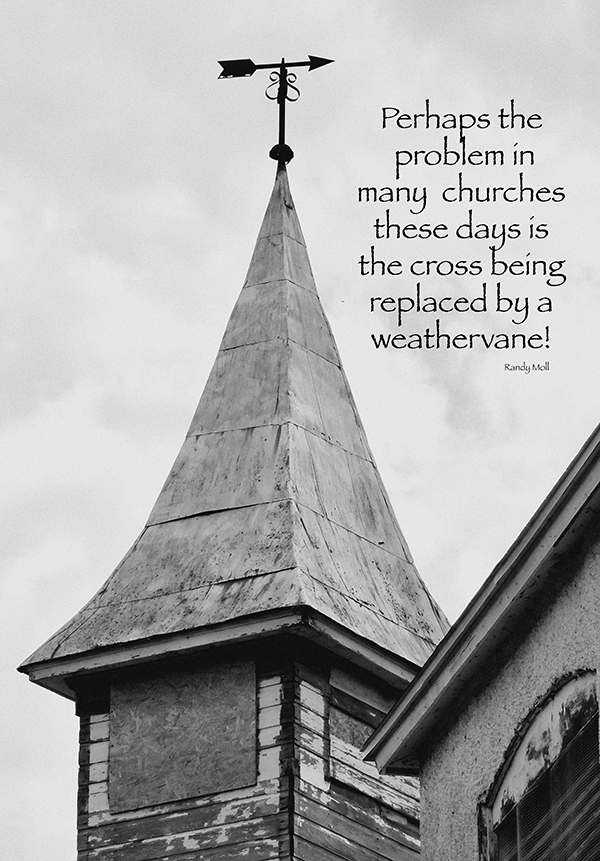
What has happened to Christian churches in America? Christian churches and, perhaps, especially the mainline denominational churches, have been infected with the error of doubting the inspiration, inerrancy and authority of the Bible.

Though this error can be traced back to nineteenth-century Europe and from there into the colleges and seminaries of the United States, it is really nothing new. In the Garden of Eden, Satan brought doubt upon God’s Word when he said, “Has God indeed said …?” (Genesis 3:1). This same question is and has been asked in many colleges and seminaries concerning all or parts of the Bible: “Has God indeed said…?”

Doubting and challenging the inspiration and inerrancy of the Bible, many modern scholars have questioned the authorship and the accuracy of what is written in the Bible: “Did Jesus really say the words attributed to Him in the Bible?” “Could the miracles really have happened?” “Was Jesus really virgin born?” “Did He rise bodily from the dead on the third day?” “Could God have created the world in six days?” “Were Adam and Eve real people?” “Did a flood actually cover the whole earth?” On and on the questions go.

Instead of accepting all of the Scriptures and each and every word of the Scriptures as the inspired and unerring Word of God (cf. 2 Timothy 3:16-17; 2 Peter 1:21; John 17:17; 10:35; Psalm 119:160; Proverbs 30:5), many modern religious scholars and now many pastors and teachers have doubts as to whether or not all of the Bible really is God’s Word. Instead of saying that the Bible is the Word of God, you may hear them say that the Bible contains God’s Word. Instead of saying that all the Bible is historically true and accurate, you may hear them say that the stories in the Bible may not be literally true, but they teach and illustrate God’s truth. Instead of accepting and teaching all that the Bible says as God’s truth, you will find them trying to dissect the Scriptures into what is God’s truth and what was only a “cultural mandate.”

As a result, more and more ministers and teachers often ignore clear and plain statements of Scripture and attempt only to use the examples of Scripture to teach faith, love, kindness, and other social and moral issues. Think about it. How often do you hear ministers calling violations of God’s commandments sins deserving of God’s eternal wrath and punishment? And, how often do you hear ministers proclaiming forgiveness of sins and eternal salvation, available only through the shed blood of Jesus? If all ministers accepted the whole Bible and each and every word of the Bible as God’s true and unerring Word, do you think there would be women in the pulpits, joint worship services and prayers with non-Christians and erring churches, or the acceptance of homosexual clergy?

The saddest part of this ever-growing problem is that the members of so many churches suffer grave danger and harm to their souls. They are lulled into feeling comfortable in their churches even though they hear little of God’s Word there anymore. Little is heard of sin and God’s judgment — in fact, all sorts of open sin is tolerated and accepted within the churches – and little is taught regarding genuine repentance and faith in Jesus Christ. Sunday school and Bible study materials are full of interesting stories and projects but are often devoid of the Bible itself. Sermons are full of interesting illustrations and religious words and concepts, but how much of it actually comes from the Bible?

What can you do? First of all, if you haven’t done it already, pick up that Bible from the shelf, blow the dust off, and start reading. You’ll be surprised at how much of it you’ve never heard taught or explained in sermons or Bible classes. Secondly, pray for your church and your pastor. Pray that they would read and study the Bible and accept it as God’s inspired and unerring Word and then proclaim it unashamedly. Thirdly, talk to your pastor and let him know that you want him to preach and teach the Bible in your church — nothing more and nothing less! Let him know in a kind way that, though his thoughts and orations may be interesting, you are coming to hear God’s Word and to learn of God and His ways.

And, finally, if your church won’t faithfully preach and teach the Bible, even after your prayers and urgings, find a church that does and go there. Don’t let the devil rob you of God’s Word and take from you the eternal blessings which God offers and gives through faith in Jesus Christ!

Scripture taken from the New King James Version®. Copyright © 1982 by Thomas Nelson. Used by permission. All rights reserved.

Author
Categories