Posted

“Let us search out and examine our ways, and turn back to the LORD; let us lift our hearts and hands to God in heaven.” Lamentations 3:40-41

For the people of Judah and Jerusalem — God’s chosen people and His visible church on earth — this was important because they were under God’s judgment. Jerusalem was besieged by the Babylonians for 1½ years. People died of starvation and hunger. Mothers ate their own children. Many were killed by the Babylonian armies and most of the survivors were carried away into exile. The temple was looted and burned. The walls of Jerusalem were broken down. All appeared to be hopeless! Cf. Jeremiah 52.

The people were urged to test and examine their ways and return to the Lord. They were to lift up their hands to God in repentance and seek His mercy and forgiveness because it was quite obvious that they had “transgressed and rebelled” and the Lord had “not pardoned” (v. 42). They had turned aside from worshiping and serving the true God and had disregarded His commandments, and the judgments which God had said would come upon them were being fulfilled (cf. Deut. 28:15ff.).

But these words certainly have an application to us as well. As believers, we should always “search out and examine our ways,” comparing them with what God has revealed to us in His Word. And, where our lives and how we think, speak and act are not in accord with God’s Word, we repent and return to the Lord, seeking His mercy and pardon. We “lift our hearts and hands to God in heaven….”

The Apostle Paul wrote: “Examine yourselves as to whether you are in the faith. Test yourselves….” (2 Cor. 13:5). And this is so important because our hearts can easily deceive us into thinking that all is well with our souls when, in fact, it is not (cf. Jer. 17:9; Psalm 32:1-5).

It is for this reason David prayed: “Search me, O God, and know my heart; try me, and know my anxieties; and see if there is any wicked way in me, and lead me in the way everlasting” (Psalm 139:23-24).

When we read and study God’s Word, the Holy Spirit, who knows all and sees all that is in our hearts, reveals to us our sinfulness and our shortcomings in regard to God’s holy will, and He directs us to the crucified and risen Christ Jesus — to His holy life in our stead, to His atoning sacrifice on the cross for our sins and the sins of the entire world and to His victorious resurrection (cf. John 3:14-15; 1 John 1:7 — 2:2; Heb. 2:14-17; Rom. 4:23-25).

God’s Word urges us to compare our lives with what God says in His Word and to repent of all that is sinful and evil, looking to Jesus and His cross for pardon and forgiveness and then seeking, with God’s help, to amend our erring ways and to walk in His way, continuing in the true and saving faith unto life everlasting!

The Catechism (“An Explanation of the Small Catechism,” Copyright© 2017, Concordia Publishing House, St. Louis, Mo., Question 371) offers us this guidance in examining ourselves before we come to the Lord’s Supper: “We are to examine ourselves in light of God’s Word to see whether — A. we are aware of our sins and are sorry for them; B. we believe in our Savior, Jesus Christ, and in His words in the Sacrament; [and] C. we intend, with the help of the Holy Spirit, to live as forgiven sinners, resisting the devil, saying no to sinful desires, and walking in the newness of life.”

And so, I ask you: “How do you measure up to what God requires in His holy commandments? Do you see and acknowledge that you have sinned and come short of what God demands? Do you see the hopelessness of your situation under God’s law and look to Christ alone — to His cross — for pardon, forgiveness and life everlasting? And, as a fruit of your faith, do you desire, with the help of God’s Spirit who dwells in you and has given us the Holy Scriptures, to amend your life and live it in accord with God’s will which is revealed to us in His Word?”

If indeed you are sorry for your sins and look to Christ and His cross for pardon and forgiveness, I announce unto you the grace and mercy of God for Christ’s sake and His forgiveness for all your sins and His promise of life everlasting? If you are not truly sorry for your sins, if you do not trust in Christ alone for pardon and forgiveness, or if you do not desire and intend to seek God’s help and strength to amend your ways and live in accord with God’s Word, I must announce unto you that you do not have God’s pardon and forgiveness and you remain under God’s eternal wrath and condemnation until you repent! Cf. John 3:18; Romans 6.

Reveal to me my sinful and erring ways, O Lord, and move me to repentance and true faith in Christ Jesus, my Savior. And, by Your Spirit, lead and guide me in the way everlasting. Amen.

[Scripture taken from the New King James Version®. Copyright © 1982 by Thomas Nelson. Used by permission. All rights reserved.]
Author
Categories

Posted

He also told this parable to some who trusted in themselves that they were righteous, and treated others with contempt: “Two men went up into the temple to pray, one a Pharisee and the other a tax collector. The Pharisee, standing by himself, prayed thus: ‘God, I thank you that I am not like other men, extortioners, unjust, adulterers, or even like this tax collector. I fast twice a week; I give tithes of all that I get.’ But the tax collector, standing far off, would not even lift up his eyes to heaven, but beat his breast, saying, ‘God, be merciful to me, a sinner!’ I tell you, this man went down to his house justified, rather than the other. For everyone who exalts himself will be humbled, but the one who humbles himself will be exalted.” Luke 18:9-14

How do we come to God in worship and prayer? At times we feel that God should hear and answer our prayers because of all our efforts to obey Him and faithfully serve Him. We look around us and see so many who call themselves “Christians” but disobey God and disregard His Word. They are unfaithful! They have sinned and compromised their faith!

In contrast, we feel that God should certainly hear our prayers and accept our worship since we have been faithful to God’s Word and have given up much to follow Christ. We are not unfaithful as others are!

The Parable of the Pharisee and the Publican was told by Jesus to those who “who trusted in themselves that they were righteous, and treated others with contempt.”

When we feel that God will hear and answer our prayers or accept our worship because we have been faithful Christians and are not unfaithful as are so many others, we are praying in a similar fashion as the Pharisee in Jesus’ parable. Rather, we should come to God as did the humble tax collector who knew of his own sinfulness and unworthiness before God, for “this man went down to his house justified, rather than the other. For everyone who exalts himself will be humbled, but the one who humbles himself will be exalted.”

When we come to God in worship and prayer, we should come humbly, acknowledging our sin and unworthiness before God. With the publican, we join in praying: “God, be merciful to me, a sinner!”

Since Christ has died for our sins and is risen again, we can also come before God with the assurance that He forgives our sins and hears and answers all our proper prayers (cf. 1 John 5:11-15). One might even say that we come to the LORD God in humble boldness — humble because we are unworthy sinners, but in boldness because Christ died for us and has redeemed us (cf. Heb. 10:19ff.).

Before Thee, God, who knowest all, with grief and shame I prostrate fall. I see my sins against Thee, Lord, the sins of thought, of deed, and word. They press me sore; I cry to Thee: O God, be merciful to me! O Jesus, let Thy precious blood be to my soul a cleansing flood. Turn not, O Lord, Thy guest away, but grant that justified I may go to my house at peace with Thee. O God, be merciful to me! Amen. (“Before Thee, God, Who Knowest All,” The Lutheran Hymnal, Hymn # 318, Verses 1,3)

The Holy Bible, English Standard Version. ESV® Text Edition: 2016. Copyright © 2001 by Crossway Bibles,
a publishing ministry of Good News Publishers.

Author
Categories

Posted

“But this I call to mind, and therefore I have hope: The steadfast love of the Lord never ceases; his mercies never come to an end; they are new every morning; great is your faithfulness.” Lamentations 3:21-23

Where would we be without the steadfast love and mercy of the Lord God? The Bible makes it pretty clear: Because of our sinfulness and rebellion against God and His ways, we would be consumed by His wrath and suffer forever the torments of hell!

But, because God’s loving-kindness and His mercies are not ended but continue to be new every morning, we live on in this world and are blessed of Him with life, food, clothing, shelter, family and loved ones.

Even more importantly, we are blessed with the Word of God and His longsuffering, giving us time to heed God’s Word, repent of our sinful ways and receive through faith His mercy and forgiveness in the crucified and risen-again Messiah Jesus.

The Bible says of Christ’s second coming and His judgment upon this evil world: “The Lord is not slow to fulfill his promise as some count slowness, but is patient toward you, not wishing that any should perish, but that all should reach repentance” (2 Peter 3:9).

That means that this world and our lives continue on a little longer because God is being patient and merciful toward us, not desiring that any should perish and be condemned to hell but that all of us should come to repentance and place our faith and hope in the Lord Jesus and His holy life and innocent sufferings and death in our stead. God is giving us more time to repent and come to faith in Jesus.

And so it is true: “The steadfast love of the Lord never ceases; his mercies never come to an end; they are new every morning; great is your faithfulness.”

All of us — and that certainly includes me — are deserving of the cessation of God’s love and mercy because of our sinfulness, but His love for us continues and His mercies are not ended. He continues to reach out to us in steadfast love and with forgiveness, calling upon us to repent and look to Him for mercy and forgiveness for the sake of Christ Jesus and His atoning sacrifice upon the cross.

And, when we look to the crucified and risen Christ Jesus in faith, we are not condemned but have everlasting life! Cf. John 3:14ff.

O gracious and merciful Lord God, thank You for Your love and mercy on me. Thank You for not giving up on me and condemning me. Grant me forgiveness and life for the sake of the Son, Christ Jesus, my Savior. In His name, I hope. Amen.

[Devotion by Randy Moll. Scripture quotations are from The ESV® (The Holy Bible, English Standard Version®), Copyright © 2001 by Crossway Bibles, a publishing ministry of Good News Publishers. Used by permission. All rights reserved.]

Author
Categories

Posted

In Lamentations 3, we read these words: “Why should a living man complain, a man for the punishment of his sins? Let us search out and examine our ways, and turn back to the Lord; let us lift our hearts and hands to God in heaven. We have transgressed and rebelled; You have not pardoned” (39-42).

When we, by our own sinfulness, bring God’s judgments upon us — whether it be financial difficulties, marital problems, health issues, etc. — we are so often quick to grumble and complain against the Lord as though we are undeserving of the troubles which have come upon us.

But why should we complain? What would we receive of the Lord if He dealt with us as we deserve on account of our sins?

Earlier in the chapter, Jeremiah wrote: “Through the Lord’s mercies we are not consumed, because His compassions fail not. They are new every morning; great is Your faithfulness” (v. 22-23).

It is for this reason that Jeremiah saw the horrific judgments which fell upon God’s people in Judah and Jerusalem (including upon himself) not as unfairness and injustice on the part of God, for they certainly deserved worse. He saw them as God calling them to examine their ways and turn back to the Lord for mercy and forgiveness!

These same words have an application to us today. Rather than complain when trouble comes and things do not go our way, why not remember that the Lord is being merciful to us — not dealing with us as we deserve on account of our sins but calling us to examine our ways, repent of our sins and return to the Lord for His mercy and forgiveness!

Remember that it is “through the Lord’s mercies we are not consumed, because His compassions fail not” (v. 22).

Again, the Bible tells us: “If we say that we have no sin, we deceive ourselves, and the truth is not in us. If we confess our sins, He is faithful and just to forgive us our sins and to cleanse us from all unrighteousness” (1 John 1:8-9). And how can God forgive us sinners when we acknowledge our sins and look to Him for mercy? “We have an Advocate with the Father, Jesus Christ the righteous. And He Himself is the propitiation for our sins, and not for ours only but also for the whole world” (1 John 2:1,2).

As you prepare for worship and the reception of Christ’s body and blood, given and shed for you for the remission of sins, don’t be angry at God because of your shortcomings. Acknowledge your sin and unworthiness and look to God to show you mercy for the sake of Christ Jesus and His cross?

Scripture taken from the New King James Version®. Copyright © 1982 by Thomas Nelson. Used by permission. All rights reserved.

Author
Categories

Posted

“Hear, O Israel: The LORD our God, the LORD is one! You shall love the LORD your God with all your heart, with all your soul, and with all your strength. And these words which I command you today shall be in your heart. You shall teach them diligently to your children, and shall talk of them when you sit in your house, when you walk by the way, when you lie down, and when you rise up. You shall bind them as a sign on your hand, and they shall be as frontlets between your eyes. You shall write them on the doorposts of your house and on your gates.” Deuteronomy 6:4-9

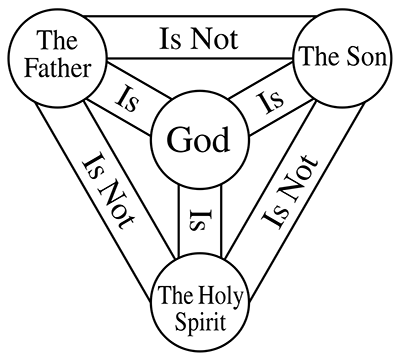
God commanded His people to listen carefully and hold fast to this truth. The God of Israel was different than the many false gods of the peoples around them. “Jehovah (or Yahweh) our God, Jehovah is one!” The God of Israel — the Father, the Son and the Holy Spirit (cf. Psalm 2; Isa. 48:16ff.; Matt. 28:19; John 1) — is one God. He is the Triune (three/one) God.

Though any who reject the truth that Jehovah God — the Father, Son and Holy Spirit — is one Jehovah do not know and worship the true God, we (by the grace of God) know Him — the God of Abraham, Isaac and Jacob. This is, in part, through the answer of believers like Athanasius and the early creeds of the Church (the Creed of Nicea and the Nicene Creed, as well as the later Athanasian Creed) to the errors of Origen, Arius and others who denied the full deity of the Son and the Holy Spirit or confused the two natures in Christ or misunderstood His person. And, of course, some of those same ancient heresies still trouble the Church today due to false teachers who have fallen into similar errors.

But to just know and profess that God is one comes far short of what God requires of us. It is not enough to just profess to believe that the true God is the Triune God. In James 2:19, we read: “You believe that there is one God. You do well. Even the demons believe — and tremble!”

God would have us trust in Him for our salvation. Jesus said in His high priestly prayer: “And this is eternal life, that they may know You, the only true God, and Jesus Christ whom You have sent” (John 17:3). He told his Jewish hearers, “If you do not believe that I am He, you will die in your sins”; and He then told them, “Most assuredly, I say to you, before Abraham was, I AM” (John 8:24, 58) — identifying Himself as the God of Abraham, Isaac and Jacob and the God who appeared to Moses at the burning bush (Ex. 3). Jesus called upon all to trust in Him and His atoning sacrifice upon the cross for salvation and pointed out that apart from Him there is no salvation (John 3:16-18; 14:6).

Jesus Christ, who is Jehovah God in the flesh (cf. Isa. 9:6-7; Luke 1:30ff.; 2:10-11; John 8:58; Heb. 1; etc.), so loved us that He went to the cross and died for our sins (cf. Rom. 5:8; Rev. 1:5). He paid in full that we might have pardon and forgiveness, and He rose again in victory!

To worship and believe in the Triune God, Jehovah God of the Bible, is to trust in Him for our life and salvation. And then, as a fruit of our faith, it is to love Him with all our heart, soul and strength. It is to treasure His Word in our hearts and to keep His Word continually before our eyes. It is to speak of Him to our children when we sit in the house, when we walk (or drive) down the road, when we lie down and when we rise up (vv. 5-9; cf. Matt. 22:37; Col. 3:16; Psalm 119:11; Eph. 6:4).

The Bible tells us that “He died for all, that those who live should live no longer for themselves, but for Him who died for them and rose again” (2 Cor. 5:15).

Jesus redeemed us with His holy and precious blood that we might now trust in Him, love Him and serve Him with all our heart, soul and might. And, He also dwells in us by His Spirit and strengthens us that we might truly worship and serve Jehovah God — the Triune God, Father, Son and Holy Spirit.

O God, Father, Son and Holy Spirit, the one Jehovah, forgive us for our failures to love You, keep Your Word before our eyes continually, and teach our children of You and the salvation You have provided for us in the Son. For the sake of Jesus’ holy life and innocent sufferings and death in our stead, pardon our iniquity and sin, and strengthen us that we might live our lives for You. Amen.

[Scripture taken from the New King James Version®. Copyright © 1982 by Thomas Nelson. Used by permission. All rights reserved.]

Author
Categories